IT Solutions
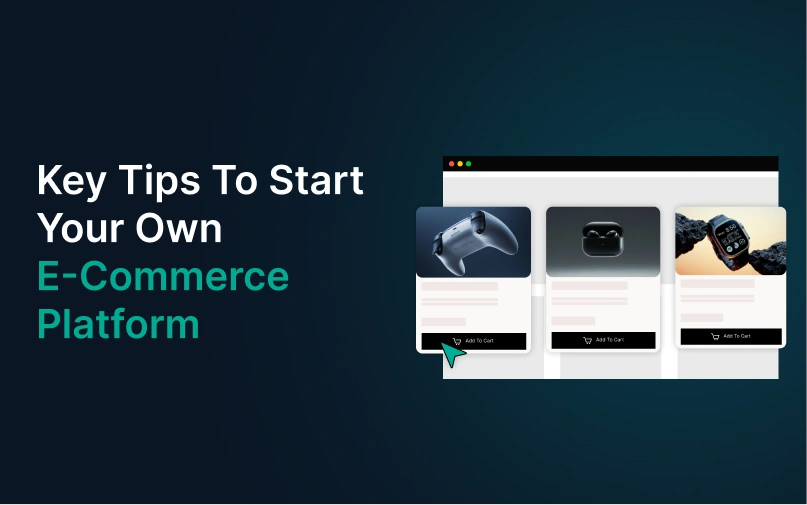
Key Tips To Start Your Own E-Commerce Platform
Starting an online business can be a thrilling adventure, but it also demands making many decisions. Each step matters, whether it’s what you sell, how you build your website or how you attract customers. A well planned E-Commerce Platform can help you to manage your products, orders, payments, customers and marketing all from one place. […]
On this page
Starting an online business can be a thrilling adventure, but it also demands making many decisions. Each step matters, whether it’s what you sell, how you build your website or how you attract customers. A well planned E-Commerce Platform can help you to manage your products, orders, payments, customers and marketing all from one place.
You don’t have to build it all at once. Start with a plan, know your customers, and choose the tools that will grow with your business. Here are some practical tips to help you get started.
Table of Contents
Toggle- 1. Choose the Right Products
- 2. Know Your Target Customers
- 3. Select the Right E-Commerce Platform
- 4. Plan Your Website Structure
- 5. Make Payments Safe and Easy
- 6. Create Strong Product Pages
- 7. Focus on SEO From the Start
- 8. Build Trust With Customers
- 9. Test Everything Before Launch
- 10. Promote Your E-Commerce Business
- FAQs
- Conclusion
- Ready to create your online store?
1. Choose the Right Products
The first step is to decide what you want to sell. Choose products that solve a real problem or provide something useful to your target customers.
Learn about what you’re investing your money in before you do it:
- Customer demand
- Competitors
- Product prices
- Profit margins
- Shipping costs
- Product quality
A good product idea gives your E-Commerce Business a better launching point. Decide why customers should buy from you and not from another seller.
2. Know Your Target Customers
You can’t sell well if you don’t know who you’re selling to. Draw a rough picture of your ideal customer.
Consider their age, location, budget, interests and shopping habits. Also think about what problems do they face? How can your products help them?
Customer research can inform your website design, product descriptions, advertising and content. It can also assist you in selecting the right Online Store Platform for your business needs.
3. Select the Right E-Commerce Platform
The right E-Commerce Platform choice is one of the most important decisions you will make. Your platform should be easy to manage and have the features your business needs.
Look for features like:
- Mobile-friendly design
- Product management
- Secure payment options
- Order tracking
- Customer accounts
- Inventory management
- SEO features
- Analytics and reports
Compare your options before you make your choice. A good Online Store Platform should save you time, not create more work.
4. Plan Your Website Structure
Make your online store easy to use for your customers. Visitors should be able to find products, understand pricing and make purchases without confusion.
Clarify categories, add useful filters. Keep your navigation simple and ensure important pages are easy to find.
For E-Commerce Development, focus on speed, mobile usability, security, and a clean layout. Having a website that’s too complex can cause potential customers to leave before they buy.
5. Make Payments Safe and Easy
Consumers want a payment process that they can trust. Accept popular payment options suitable to your target market.
Based on your location, you can accept cards, UPI, net banking, digital wallets or cash on delivery.
Your E-Commerce Platform must have secure payment processing and safeguard customer information. Also provide shipping charges, return rules and other important information before checkout.
6. Create Strong Product Pages
Your product pages are like your sales team. Your content needs to provide enough information to make a decision, because customers can’t touch the product.
Use clear product names, useful descriptions, quality images, prices, sizes, specifications and customer reviews.
Incorporate relevant keywords naturally in your product content. Good product pages also help your E-Commerce Business to be found in search results and get more visitors.
7. Focus on SEO From the Start
Don’t wait until your store is fully built to think about SEO. Search optimisation should be part of your web site planning.
Add appropriate keywords to your product titles, descriptions, URLs, headings and image alt text. Write useful blog posts that address common customer questions.
A well-optimized E-Commerce Platform can attract traffic from search engines without depending solely on paid advertising.
8. Build Trust With Customers
Trust can make all the difference when you shop on-line. Customers want to know their money and personal information are safe.
Include a ‘About Us’ page, contact details, customer reviews, return policy, shipping information and privacy policy.
This information should be easily accessible on a professional Online Store Platform . Clear information can reduce customer doubts and increase completed purchases.
9. Test Everything Before Launch
Try the entire customer journey before launching your E-Commerce Platform.
Test your website on phones, tablets and computers. Test product searches Filters Shopping cart Checkout Payment options Contact forms & emails
Have some people try the website and tell you where they have problems. Small problems detected before launch can prevent larger customer complaints later.
10. Promote Your E-Commerce Business
Creating a website is only half the battle. You need to get customers into your store as well.
SEO, social media, email marketing, content marketing, Google Ads, and other relevant channels. Track which channels are driving visitors and sales.
Your E-Commerce Development plan should take into account future marketing needs as well. That makes it easier to add new features and plug in marketing tools as your business grows.
FAQs
What is an e-commerce platform?
E-Commerce Platform is a software that allows businesses to create and run online stores. It can handle products, payments, orders, customers and other store activities.
How much does it cost to start your online store?
Your costs will vary depending on your products, your website features, design and development needs, payment set up, hosting and marketing budget. Begin with core features and expand as your sales increase.
Why is E-Commerce Development beneficial for a new business?
Yes. Good e-commerce development can improve website performance, security, mobile usability, and the customer experience. It will also allow your store to grow.
Can a small business open an online store?
Yes. Small businesses can begin with a limited product offering and a basic E-Commerce Platform. As your orders and customers grow, you can add products and features.
Conclusion
Starting an online store doesn’t need to be intimidating. Choose the right products, know your customers, pick a suitable E-Commerce Platform, and make an easy-to-use website.
Prioritise trust, SEO, safe payments, useful product info and good customer service. With effective planning and continuous efforts, your E-Commerce Business can establish a robust online presence and grow over time.
Ready to create your online store?
Want to turn your business idea into a professional online shop? Bytewebsol is specialised in creating a user-friendly e-commerce website that will help you to plan, design and develop your business goals.
Contact Bytewebsol today and put you on the road to building your own online store.
Updated